
Primal Alexander Primer, EP 03: Re:Evolution of a Technique

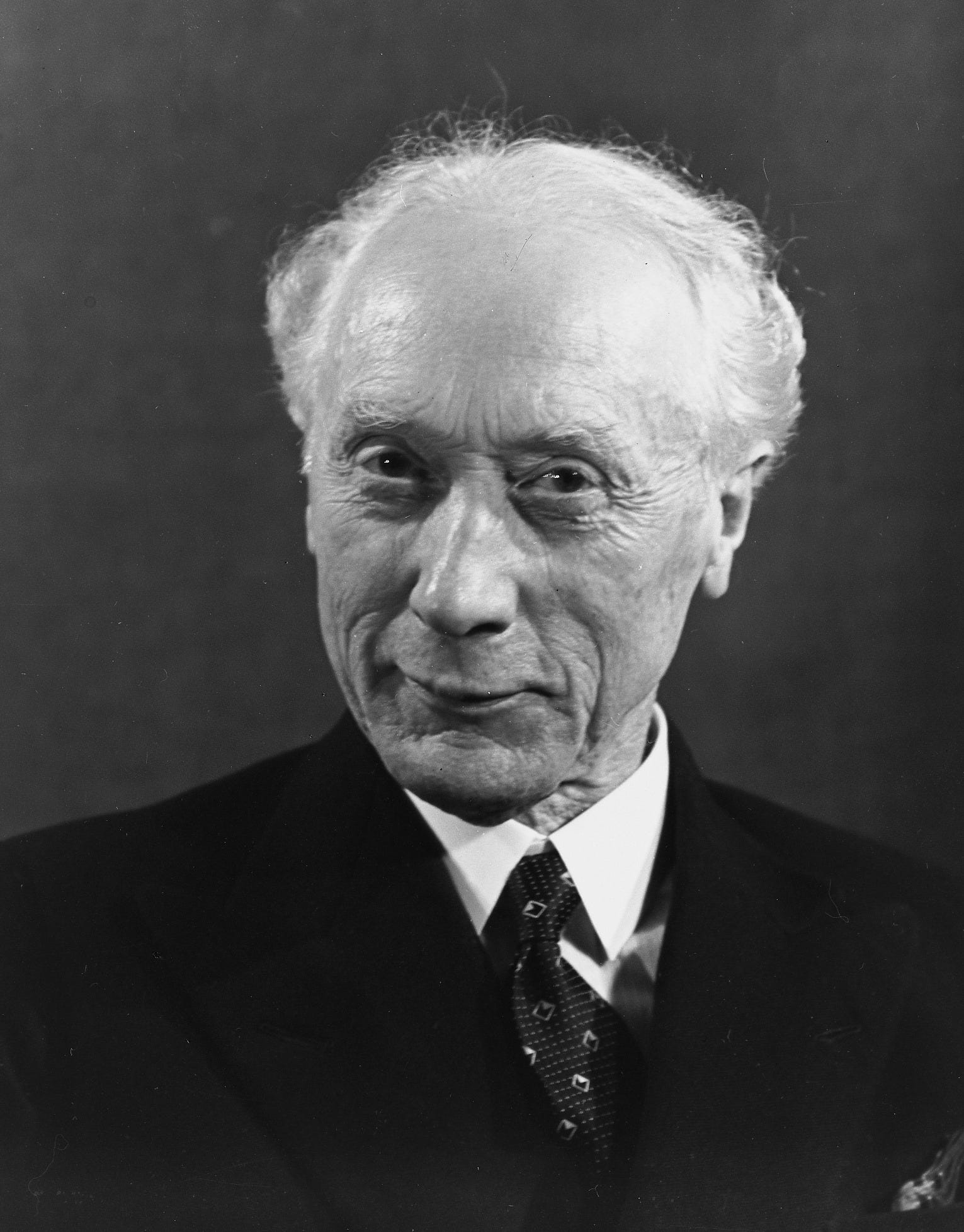
The evidence from Evolution of a Technique (EOAT) strongly supports the proposition that Alexander's vocal problems were solved not through conscious control and direction, but through the gradual restoration of more natural use via years of practicing inhibition in front of mirrors. This process created a crucial gap between intention and execution that allowed his nervous system to recalibrate itself over time.
The Discovery of Unreliable Sensory Appreciation
An important phase in Alexander's journey began with a startling revelation about the unreliability of his kinesthetic sense. When observing himself in mirrors, he discovered a profound discrepancy between what he felt himself doing—putting his head "forward and up"—and what he actually saw himself doing—pulling his head "back and down." This discovery of unreliable sensory appreciation became foundational to understanding how habitual patterns feel "right" even when objectively problematic.
As Alexander documented in EOAT, his reaction to stimuli was "constantly the opposite of that which I desired," and his "sensory appreciation (feeling) of the use of my mechanisms was so untrustworthy that it led me to react by means of a use of myself which felt right, but was, in fact, too often wrong for my purpose." This neurological phenomenon occurs because our brains adapt to whatever we repeat through neuroplasticity, making dysfunctional patterns feel familiar and therefore subjectively correct.
The Practice of Inhibition as Nervous System Training
Alexander's years of mirror work established what he called a "procedure contrary, not only to any procedure in which our individual instinctive direction has been drilled, but contrary also to that in which man's instinctive processes have been drilled continuously all through his evolutionary experience." This radical departure from habitual response patterns was the key to his transformation.
Crucially, when Alexander used the word "instinctive" in phrases like his "instinctive response to the stimulus to gain my original end," he was describing what we would more accurately call "habitual" responses—learned patterns that had become so automatic they seemed “instinctive”.These weren't true biological instincts but deeply ingrained habits that he had mistaken for natural responses.
The inhibition practice created what contemporary understanding would recognize as a neuroplastic retraining process. By repeatedly choosing "in the majority of cases, to maintain my new conditions of use either to gain some end other than the one originally decided upon, or simply to refuse to gain the original end," Alexander was literally rewiring his nervous system's default responses. This wasn't conscious control in the conventional sense of muscular manipulation—it was the conscious interruption of automatic patterns.
The Gap as Transformational Space
The crucial element was the gap itself—the pause between stimulus and response that inhibition created. As documented in the teaching materials, Alexander discovered that when facing the decision to speak, if he could maintain this gap and "refuse to gain the original end," his "habitual response to the stimulus to gain my original end was not only inhibited at the start, but remained inhibited right through, whilst my directions for the new use were being projected."
This gap became a space where his nervous system could access its inherent coordination rather than being driven by habitual interference patterns. Alexander wasn't imposing a new way of functioning through willful control; instead, he was removing the obstacles to natural coordination by consistently interrupting the habits that had been interfering with his vocal mechanism.
Contemporary Application: Primal Alexander's Pause and CuriousThinking™
This same principle of creating a transformational gap is embodied in Primal Alexander methodology through what is called "The Pause" and CuriousThinking™. The process is elegantly simple: "you do some CuriousThinking™, you notice the effect that it has on you. It's an effect of easing. And then, as you initiate the activity, you get curious about what’s happening to easing you were experiencing before you moved.”
The revolutionary element lies in the curiosity about how this easing is affected by activity initiation. Rather than trying to maintain ease during activity, Primal Alexander teachers learn to ask themselves: "what's happening to the ease that I just started with as I put my hands on someone, as I notice what they're doing, as I speak to them, as I observe them." This creates what Primal Alexander calls IndirectDirection™—a form of conscious direction that works through curiosity rather than control.
The beauty of this approach, is that "it's not about keeping the ease going. It's about being curious about what happens to it as you go from not doing the activity to doing the activity." This curiosity itself maintains the gap between intention and execution, allowing the nervous system to function much more naturally during activity.
Natural Use Emerging Through Non-Interference
The evidence suggests that, in fact, Alexander's "conscious, reasoning direction" wasn't so much about the “Constructive Conscious Control of the Individual”, the title of his second book, but rather about consistently choosing not to engage in his habitual patterns of interference. As he documented, "once free from this tendency, I also became free from the throat and vocal trouble and from the respiratory and nasal difficulties with which I had been beset from birth."
This freedom came not from learning new muscular patterns, but from allowing his innate coordination to function without the interference of his acquired habits. The nervous system's natural tendency toward optimal function could finally express itself when the learned patterns of misuse were consistently inhibited.
This principle is reflected in Primal Alexander's understanding that when students direct attention to ease, they naturally "inhibit whatever they were thinking or doing before—anytime you do one thing, you're inhibiting 1000 different things." This creates inhibition through curiosity and awareness, rather than through stopping or preventing specific actions. In Primal Alexander, "direction emerges naturally as habitual interference is reduced" and "as soon as you stop interfering with the natural direction and balancing of your body, it manifests on it’s own.”
The Gradual Nature of Neuroplastic Change
The transformation occurred gradually because neuroplastic change requires time and repetition. Alexander worked "on this plan for a considerable time" before achieving lasting freedom from his vocal problems. This timeline aligns with our understanding of how the nervous system creates new neural pathways while dismantling old ones—a process that occurs through consistent practice rather than sudden conscious interventions.
The mirrors provided objective feedback that counteracted his unreliable sensory appreciation, while the inhibition practice created the neurological conditions for his system to gradually reorganize itself around more natural patterns of use. This was fundamentally different from trying to consciously direct specific muscles or movements.
Primal Alexander acknowledges this same gradual process through practices like the Études, which are designed as "really simple" explorations that students can repeat consistently. The emphasis is on "the repetition of it and the simplicity of it and the consistency of it that makes the biggest impact on your nervous system." This mirrors Alexander's own gradual transformation through consistent mirror practice and inhibition.
Conclusion
One way to look Alexander's recovery is that the path to improved use lies not in imposing conscious control over natural processes, but in creating the conditions where natural coordination can emerge. Through years of practicing inhibition, he established a gap between intention and execution that allowed his nervous system to gradually release patterns of interference and return to more natural functioning.
This process of removal rather than addition, of inhibiting rather than doing, created the space for his innate coordination to restore itself—ultimately solving his vocal problems through the wisdom of non-interference rather than the effort of conscious direction. Primal Alexander continues this tradition through CuriousThinking™ and IndirectDirection™, recognizing that the most profound changes occur when we create pauses for curiosity and allow our natural coordination to emerge through conscious non-interference.
The evidence from EOAT seems to support the view that Alexander's transformation was not achieved so much through willful control, but through the patient cultivation of a gap that allowed his nervous system's inherent wisdom to reassert itself. This understanding can revolutionize our approach to both our personal application of his discoveries and how we teach them to students, emphasizing the power of conscious inhibition and IndirectDirection™ over constructive conscious control in facilitating the improvement of the Use of oneself.