
The Paradox of Human Change: Finding Freedom in Tiny Steps.

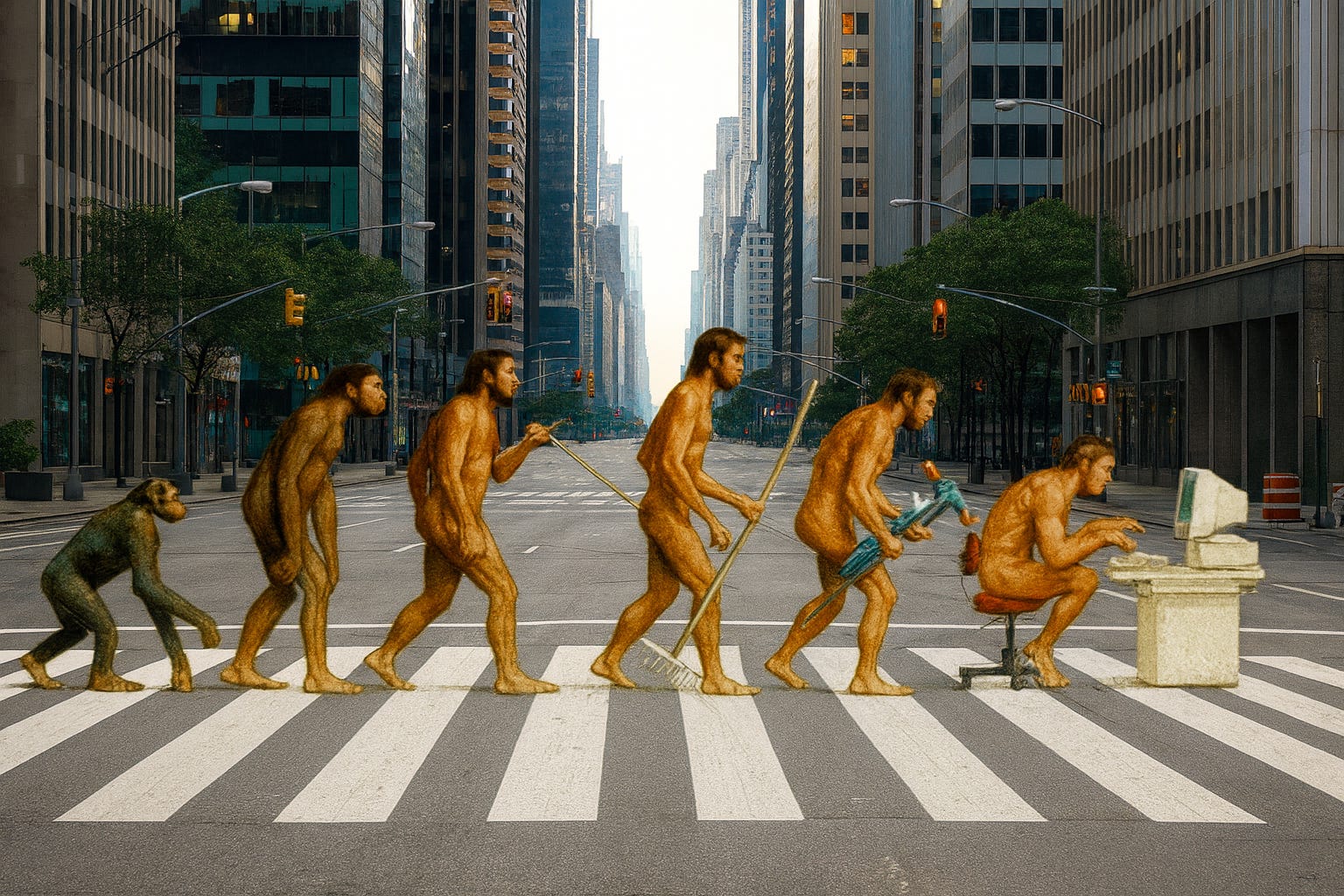
Human beings exist in a perpetual contradiction. Our greatest strength—our remarkable capacity for adaptation—simultaneously serves as both our salvation and our downfall. This paradox lies at the heart of why genuine change remains elusive, yet understanding it offers a pathway to authentic transformation through an internal compass that points toward our truest nature.
The Comfort of Complacency
Our evolutionary success stems from our ability to adapt to any circumstance. This adaptability has allowed our species to thrive across diverse landscapes and survive countless adversities. However, this same mechanism often traps us in patterns of habitual functioning that no longer serve us.
The human psyche gravitates toward the familiar, even when harmful. We develop an addictive relationship with the status quo, finding safety in predictability regardless of whether our circumstances promote growth or stagnation. This creates a comfortable prison from which escape requires tremendous courage.
Breaking through habitual complacency demands visceral, moment-to-moment awareness of the true consequences of remaining unchanged. This awareness cannot be theoretical; it must be experienced as lived reality that penetrates our daily consciousness.
The Necessity of Crisis
The twelve-step tradition speaks of "hitting bottom"—when the pain of continuing destructive patterns finally outweighs the fear of change. This reveals a fundamental truth: we rarely embrace transformation until we have no other choice. The tragedy is that we often fear the rawness accompanying genuine change more than we fear the slow deterioration of stagnation.
Most people remain unaware of how seriously their habitual functioning limits their potential. We possess thousands of sophisticated ways to rationalize gradual decline, justify prioritizing productivity over authentic growth, convince ourselves that getting things done matters more than becoming who we're meant to be.
Alexander experienced this crisis when his acting career hung in jeopardy due to vocal problems. Only when facing potential loss of everything he valued did he embark on the journey that would revolutionize our understanding of human movement and consciousness.
Ease: The Compass That Points to True North
Traditional approaches to change emphasize external metrics: weight lost, money earned, goals achieved. While these have their place, they can obscure the tiny but fundamental shifts that can lead us astray from our authentic path. What we need is an internal compass—a reliable indicator that tells us when we're moving in alignment with our natural design rather than reinforcing habitual patterns.
That compass is ease. Not the lazy ease of avoiding challenge, but the organic ease that emerges when we stop fighting against our essential nature and begin working with our inherent capacities. This quality serves as our true north, consistently pointing toward what is genuinely beneficial and away from what merely feels familiar.
When we learn to recognize the presence or absence of ease in our actions, thoughts, and responses, we gain moment-by-moment feedback about whether we're moving toward freedom or deeper into habitual constraint. The habitual path, no matter how well-worn, carries underlying tension—a quality of forcing against the grain of natural functioning. The natural path, though potentially unfamiliar, contains fundamental rightness that manifests as increasing ease.
This ease is not passive but dynamic and alive. It reflects our natural state of fluid responsiveness, where effort becomes efficient and struggle gives way to skillful action. Like a river finding its way to the sea, this quality guides us along the path that works with rather than against the laws governing healthy human functioning.
Learning to use ease as a compass first requires that we have a way for creating ease whenever we want. Enter: CuriousThinking™—a dynamic form of open curiosity that interrupts old patterns and allows your natural coordination to emerge.
The Essence of CuriousThinking™
CuriousThinking™ is a way of asking yourself a particular question before you move that interrupts old patterns and allows your natural coordination to emerge. At its core, it's about directing attention to already existing places of ease rather than to areas of tension or difficulty. This approach harnesses the remarkable capacity of the human nervous system to reorganize itself through awareness rather by force.
The Neurological Foundation
The actual power of CuriousThinking™ lies in its alignment with fundamental neurological principles. When attention is directed toward ease, it stimulates parasympathetic nervous system activity—the "rest and digest" response that promotes healing, relaxation, and optimal function. Conversely, focusing on tension, pain, or problems activates sympathetic nervous system responses associated with stress and increased muscular tension.
This attention-based approach works through what researchers understand about mirror neuron function and the body's innate wisdom. Just as the same mechanism that allows the neck to be free so the head can move forward and up also responds to paying attention to ease, CuriousThinking™ taps into the vertebrate intelligence that naturally informs all movement coordination.
Calibrating the Compass
This calibration happens through patient attention to the feedback our system provides when we approach movement with genuine curiosity rather than habitual doing.
By observing what happens to the ease created by CuriousThinking™ as you begin to move, we move in harmony with our design. When we force against our nature, something tightens. These sensations aren't random—they're information, guiding us toward choices that support wellbeing and away from those that deplete us.
The habitual path often masquerades as easy because it requires no conscious choice—we simply follow established patterns through habitual ways of doing. But underneath lies subtle tension, the ongoing effort required to maintain patterns that may no longer serve us.
First, Inhibition creates a gap between stimulus and response, allowing us to notice our capacity for choice in real-time. As we inhibit, CuriousThinking™brings ease into the mix facilitating movement and a creating a condition that allows to experience what it’s like to move outside our habits and consequently to know exactly when we’ve fallen back under their influence.
First, inhibition creates gap between stimulus and response, giving us the opportunity to make a choice outside our habit. As we inhibit this habitual reactivity, CuriousThinking™brings ease into the mix facilitating movement and a creating a condition that allows to experience what it’s like to move outside our habits and consequently to know exactly when we’ve fallen back under their influence.
This more natural path, while unfamiliar, carries a sense of ease of that emerges as soon as we stop trying to control outcomes and start paying attention to what's actually happening to us. This curious attention builds something crucial: a present-moment awareness of our immense capacity to allow beneficial change to unfold rather than our forcing predetermined results.
The Path of Incremental Transformation
Despite the overwhelming nature of meaningful change, there exists a more accessible path. Transformation can unfold through barely perceptible micro-steps, each so small as to bypass resistance while gradually building momentum.
Sustainable change happens through accumulation of tiny adjustments rather than sudden departures from established patterns. Like water gradually wearing away stone, consistent small actions reshape our lives more effectively than sporadic intense effort.
The key lies in developing present-moment awareness of our capacity for change. Rather than focusing on distant goals, we can notice and act upon possibilities for tiny transformations to happen right now.
Finding Freedom in Tiny Steps
Change only happens now. Only in the present moment can we actually do something different, and only here can we sense whether our choices lead toward or away from our true potential.
When we learn to trust ease as our compass, we develop confidence in our capacity for beneficial change. We begin to understand that transformation is not about forcing ourselves into predetermined molds, but about discovering and expressing what is already whole within us.
Learning to be satisfied with incremental change guided by ease requires a fundamental shift in perspective. Instead of measuring progress against external standards, we can appreciate small movements toward greater naturalness.
The paradox of human adaptability—our tendency to accommodate even harmful circumstances—need not be our limitation. When understood and worked with skillfully, it becomes the mechanism through which we can gradually reshape our lives toward greater authenticity and freedom.
By learning to follow the compass of ease, we discover that change is inevitable when we stop forcing and start allowing our natural wisdom to guide us. Each tiny step taken in the direction of ease moves us closer to who we have the potential to be.
Change remains challenging, but with ease as our true north, we can navigate this journey with increasing confidence, knowing that each step that’s guided by this “Inner Sensei”, this inner teacher, takes us from the prison of habitual reactivity and puts us on the road toward the freedom of an easier way of being.